
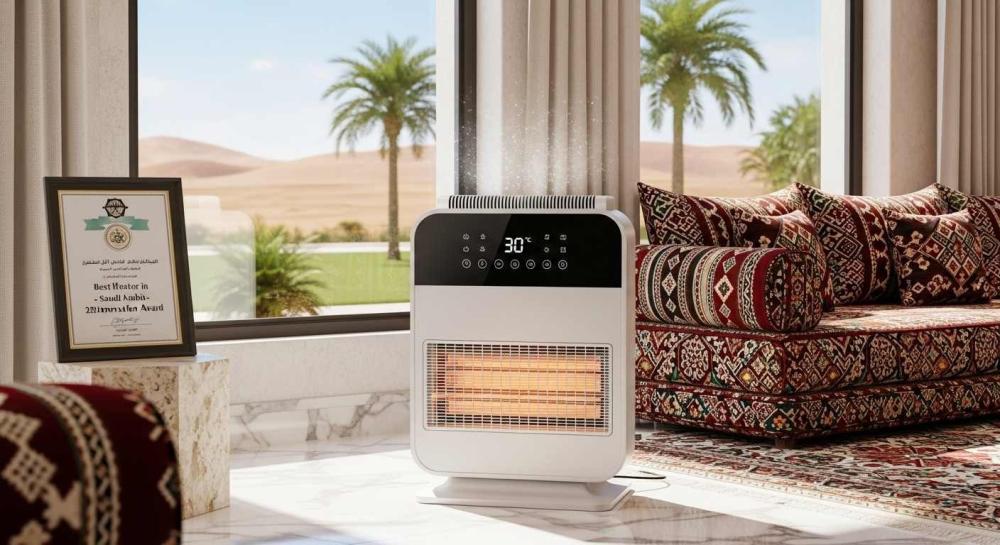
With temperatures dropping in Saudi Arabia during winter, finding a heater becomes more than a luxury; it's a necessity to ensure the comfort and safety of the family. The Saudi market is overflowing with diverse options, making the task of choosing the best heater in Saudi Arabia a perplexing one for many. Is performance or energy efficiency paramount? Is safety the priority or heating speed?
In this detailed and in-depth guide, we'll take you on an experience-based and reliable (EEAT) knowledge journey to help you make the right purchase decision. We'll delve into the key differences between various types of water heaters, from electric and oil-filled to ceramic and central heating systems, to ensure you get the perfect heating appliance for your needs and budget. Let's begin your journey to warmth.
The best types of heaters in Saudi Arabia
Understanding heating appliance classifications is the first step to choosing the best one. Heaters available in the Saudi market are primarily divided into categories based on their operating mechanism and power source, which directly affect heating efficiency, electricity consumption, and safety level.
A. Portable Electric Heaters
This category is the most common and versatile, ideal for localized heating or medium-sized bedrooms and living rooms. It further branches into several types, which we will detail later.
b. Oil-filled radiators
It works by heating oil inside metal plates, and is an excellent option for those looking for long-lasting and continuous heating, and is considered one of the safest options in terms of not consuming room oxygen.
C. Gas Heaters
It provides powerful and cost-effective heating compared to electricity in some cases, but it requires good ventilation and is less safe if not handled carefully, so its use is less common in modern homes in Saudi Arabia.
Dr. Built-in & Wall Heaters
They are often used in bathrooms or small rooms, and are characterized by space saving and elegant design.
What are the best types of electric heaters in Saudi Arabia?
Modern electric heaters are characterized by significant advancements in safety and efficiency. Let's evaluate the most prominent technologies available that earn the title of best electric heater in Saudi Arabia:
A. Ceramic Heaters
It uses ceramic heating elements and is highly efficient at converting electricity into heat.
- Features: Very fast heating, small size, relatively safe (external elements do not heat up too much), and good heat distribution via a fan.
- Disadvantages: It can be a little annoying due to the noise of the fan, and it mainly heats nearby spaces.
b. Halogen/Quartz Heaters
It uses infrared radiation to heat objects and people directly, not the surrounding air.
- Features: Energy saving compared to traditional heaters, instant warmth, does not cause dryness in the air.
- Disadvantages: The heating is very localized, and the emitted red light may be bothersome to some.
C. Mica Heaters
A modern technology that combines thermal and radiant heating.
- Features: Very fast heating, operates very quietly, good energy saving, and comprehensive ambient heating.
- Disadvantages: Its price is often higher than other types.
When looking for the best electric heater in Saudi Arabia , focus on models with automatic shut-off in case of tipping or overheating to ensure maximum safety. Ceramic and mica heaters are the most recommended for everyday use in living rooms.
Which is better, a ceramic heater or an oil heater? An in-depth analysis to help you make the crucial choice.
This is the most common question among shoppers, and the answer depends entirely on your usage patterns. Both are among the best heating options available, each with its own unique characteristics:
| Comparative Advantage | Ceramic Heater | Oil Heater |
| heating speed | Very fast (instant) | Relatively slow (requires 15-20 minutes) |
| Warmth quality | Directed and localized warmth | All-over warmth, gentle and long-lasting |
| Energy consumption | It consumes more energy, but only for short periods. | It consumes less energy to maintain heat (efficient in the long run) |
| Noise level | A slight noise may occur from the fan. | Completely quiet |
| Safety | Safe, rapid cooling after closing | Safe, but the outer surface may be very hot. |
| Weight and ease of transport | Lightweight and portable | Relatively heavy (difficult to transport frequently) |
When should you choose a ceramic heater?
- If you need immediate and rapid heating upon entering the room.
- For heating in small workspaces or under a desk.
When should you choose an oil heater?
- If you need continuous heating throughout the night in bedrooms (thanks to its silence and quality of non-drying warmth).
- To heat rooms that require a constant temperature for long periods.
Experts' verdict: Oil heaters are best for continuous heating and are most economical in the long run, while ceramic heaters are best for quick and localized heating.
How do I choose the right heater? 5 factors to consider before buying.
Choosing the ideal heating appliance requires more than just considering price or appearance. Your decision should be well-informed based on a range of technical and logistical factors.
1. Room size and power measurement (watts)
The heater's power (in watts) should be appropriate for the room's size. A general rule suggests approximately 10 watts per square meter of room area.
- A small room (9 m²): You need a heater with a power of 900-1000 watts.
- A medium-sized room (15 m²): requires a heater with a power of 1500-2000 watts.
- Large halls (25 m² and above): may require a 2500 watt heater or the use of two units.
2. Safety and security features
Safety is paramount, especially in homes with children. Look for:
- Tip-Over Switch: To automatically turn off the heater if it falls over.
- Overheat Protection: To shut off if the temperature exceeds a safe limit.
- Cool-Touch Housing: Important in ceramic heaters to avoid burns.
3. Energy efficiency
Since heaters are among the most energy-intensive appliances, check the energy efficiency label. Heaters with a programmable thermostat are best because they maintain a constant temperature and shut off when that temperature is reached, thus reducing energy consumption.
4. Control and Programming Characteristics
Look for heaters equipped with:
- Timer for automatic on/off.
- Remote control.
- Multiple heat settings (Low, Medium, High).
5. Easy to transport and store
If you intend to move the heater between rooms, choose a lightweight model such as ceramic or mica, or oil heaters with sturdy, easy-to-move wheels.
What are the best types of central heating systems in Saudi Arabia? Solutions for comprehensive heating.
In luxury homes, villas, and large buildings, portable heaters may not be a practical solution. This is where central heating systems come in, providing consistent and uniform warmth throughout the entire house.
The most prominent central systems in Saudi Arabia:
A. Hot Water Central Heating
This system works by heating water in a central boiler and then pumping it through a network of pipes to radiators distributed throughout the rooms.
- Features: Very comfortable heating, does not cause dryness, and the temperature of each room can be controlled separately (Zone Control).
- Disadvantages: High initial installation cost, and requires periodic maintenance of boilers and pipes.
b. Underfloor Heating (UFH)
Whether it is water-based (relying on hot water pipes) or electric (relying on a network of wires), this technology provides the most comfortable heating as the heat rises from below.
- Features: The best form of thermal heating, invisible, economical to operate after reaching the desired temperature.
- Disadvantages: High installation cost, and requires longer periods to reach the desired temperature.
C. Heat Pump System
It is a very effective alternative to traditional air conditioners, as it can provide heating in winter and cooling in summer.
- Features: Very high energy efficiency (up to 300% efficiency), and dual function (heating and cooling).
- Disadvantages: It may not be very effective at very low temperatures (which are rare in most areas of Saudi Arabia).
The most important consideration: the choice of a central system depends on the stage of construction (easier in new construction) and on the budget allocated for installation and maintenance.
Is the Saudi ceramic water heater good? An analysis of the quality of local products.
When discussing heating appliances in Saudi Arabia, it's essential to mention trusted local brands. Saudi Ceramics is a leading name in sanitary ware and building products, but when referring to "heaters," they are often associated with water heaters, not room heaters.
For water heaters
Saudi ceramic water heaters are famous in the market for their quality and durability.
- Strengths:
- Durability: It is known for its long lifespan and resistance to internal corrosion.
- Availability and after-sales service: Easy access to spare parts and technical support throughout the Kingdom.
- Variety: Models are available in different sizes and capacities to suit all household needs.
Regarding room heaters
If the company has recently introduced room heaters, they should be evaluated based on the criteria mentioned earlier: type of heating technology (ceramic, oil, etc.), safety features, and energy efficiency. Local brands often ensure their products are adapted to local climate and electricity consumption.
If you're looking for a central or home water heater , Saudi Ceramics water heaters are a robust and reliable option that reflects local manufacturing expertise and quality. As for room heaters , the evaluation depends on the specific model and comparisons with other international brands in the Saudi market.
Together we have reviewed the most minute details on how to choose the best heater in Saudi Arabia for 2025. From the crucial comparison between a fast-heating ceramic heater and a comfortable, long-lasting oil heater, through the evaluation of central heating systems, to the necessary safety and energy efficiency standards.
Warmth in your home is not just comfort, but an investment in your family's health and happiness. Always remember that the best choice is the one that balances:
- Room size (to determine the appropriate wattage).
- Usage pattern (Do you need rapid or continuous heating?).
Safety factors (which should be the top priority).